
Vedic Literature
The foundation of IKS lies in Vedic literature, one of the oldest and richest sources of knowledge in human history. The word “Veda” comes from the Sanskrit root vid (to know) and literally means knowledge.
- Vedic literatures are broadly classified into two categories:
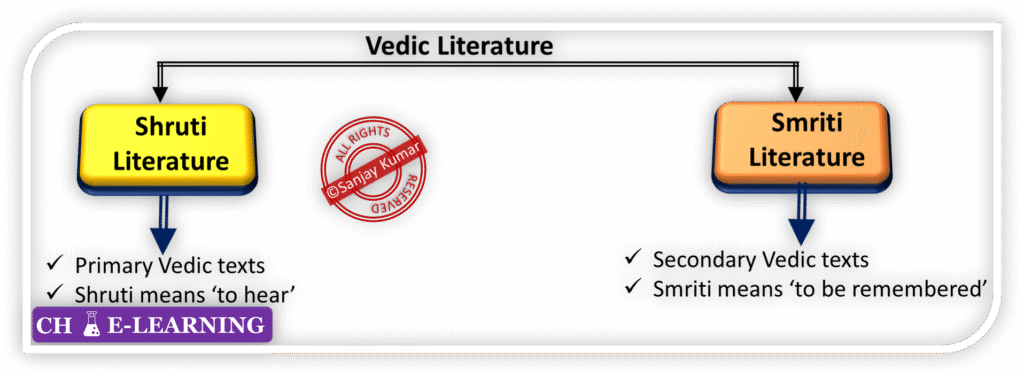
Shruti Literature:
The term “Shruti” is derived from the Sanskrit root meaning “that which is heard”.
- It refers to the knowledge directly revealed to sages (ऋषि) through profound meditation and spiritual experience.
- This divine knowledge was traditionally transmitted orally across generations, remaining unaltered over time.
- Shruti literature is considered to encapsulate eternal and immutable truths, making it the most authoritative and sacred category of Vedic texts within Hinduism.
- The Vedic Texts, regarded as the original scriptures, comprise four main texts.

Rigveda (ऋग्वेद)::
The Rigveda is the oldest of the four Vedas and serves as the foundation of Vedic knowledge.
- It is a vast collection of hymns that explore deities, philosophical concepts, and nature.
- Composed approximately between 1500‒1200 BCE,
- The Rigveda includes hymns extolling various deities such as Agni (fire), Indra (rain and thunder), and Soma (the sacred ritual drink).
Structure & Organization:
- The Rigveda comprises 1,028 hymns (Suktas) containing about 10,600 verses.
- These hymns are organized into 10 books (Mandalas), with Books 2–9 considered the oldest, and Books 1 and 10 added later.
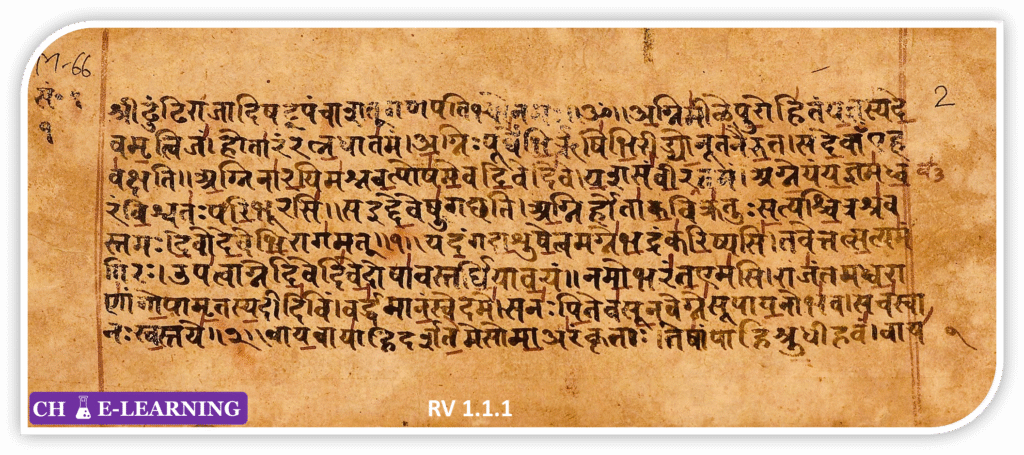
- Book 9 is dedicated exclusively to Soma, while Books 1 and 10 contain more philosophical hymns. Notable examples include:
- Nasadiya Sukta (नासदीय सूक्त) (RV 10.129)—the Hymn of Creation—which contemplates the origins of the universe.
- Description of Prajāpati as the “golden embryo” (Hiraṇyagarbha, हिरण्यगर्भ), symbolizing the seed of creation.
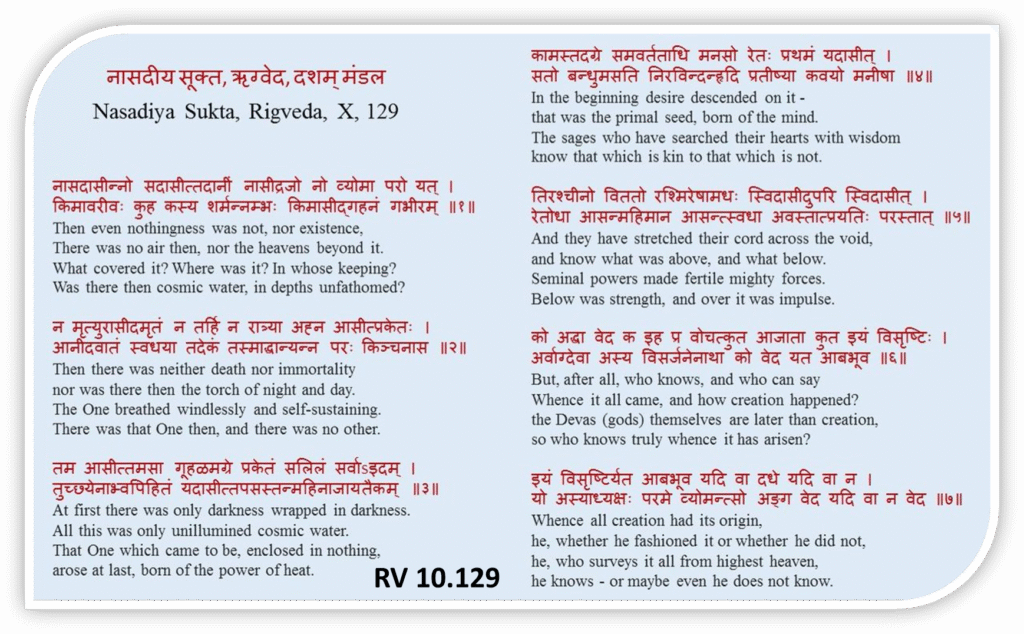
- Books 2–9 primarily address cosmology, nature, and the gods. The focus and frequency of hymns for major deities are as follows:
| Deity | Role | Hymn Count/Focus |
|---|---|---|
| Indra | King of Gods | ≈ 250 hymns |
| Agni | Divine fire | ≈ 200 hymns |
| Soma | Ritual drink | Mandala 9 |
- The renowned Gayatri Mantra (RV 3.62.10) is dedicated to Savitṛ, the solar deity.
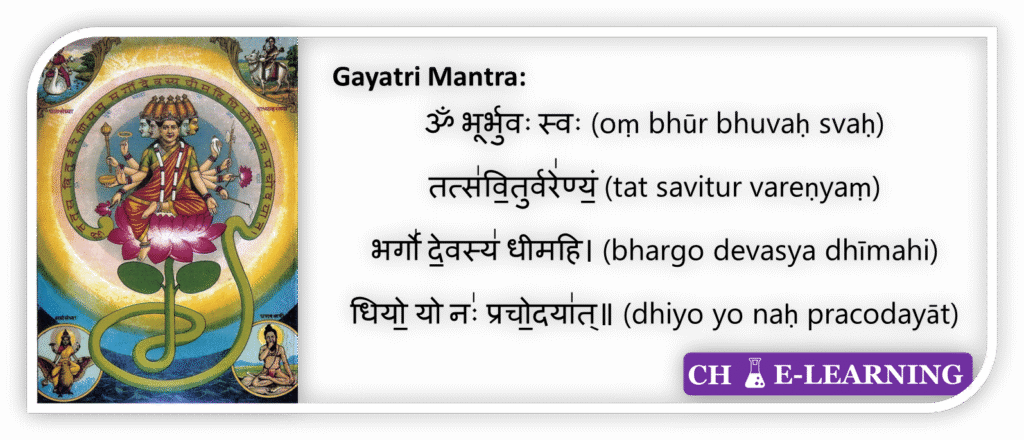
- Altogether, these hymns were designed for meditation, concentration, and invocation of divine energy.
Rigvedic transmission was preserved through an exacting oral tradition, known as the Guru–Shishya paramparā (गुरु-शिष्य परंपरा-teacher–disciple lineage). The Rigveda ultimately emphasizes devotion, philosophical reflection, and a profound understanding of the universe.
Samaveda (सामवेद):
The Samaveda is primarily a compilation of melodies and chants. While most verses are adopted from the Rigveda, they are uniquely arranged for musical rendition during rituals and sacrifices.
- The text was composed between roughly 1200‒1000 BCE.
Structure & Organization:
- The Samaveda contains about 1875 verses, only 75 of which are unique; the remainder are borrowed from the Rigveda.
- It is divided into two principal components:
- Ārchika sections – textual mantras
- Gāna sections – musical arrangements of the mantras
- It survives in three major recensions: Kauthuma (कौथुमा), Rāṇāyanīya (राणायनीय), and Jaiminīya (जैमिनीय).
Significance:
The Samaveda laid the groundwork for subsequent Indian musical concepts, particularly the rāga (melodic frameworks) and tāla (rhythmic cycles).
Yajurveda (यजुर्वेद)::
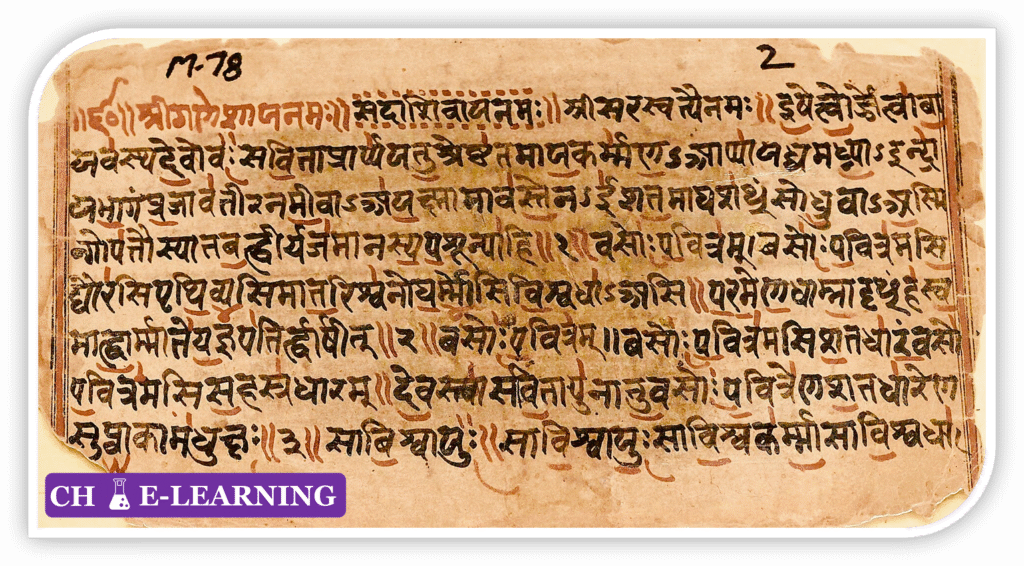
The Yajurveda primarily comprises prose mantras and specific ritual instructions for conducting sacrifices (Yajñas).
- Unlike the Rigveda or Samaveda, it is more focused on ritual praxis and ceremony.
- It was composed approximately between 1200‒800 BCE.
Structure & Organization:
- The Yajurveda details comprehensive guidelines for ritual performance, concentrating on accuracy and method rather than metaphysical speculation.
- It exists in two principal versions (Samhitas):
- Shukla (White) Yajurveda: Characterized by a systematic arrangement, with a clear separation of verses and their explanations.
- Krishna (Black) Yajurveda: Integrates verses with explanatory prose and ritual commentary.
- Rituals such as Agnihotra (fire offerings) and other sacrificial rites are central themes.
- It also references auspicious timings, determined by lunar and solar cycles, crucial for planning rituals and festivals.
Significance: The Yajurveda serves as a practical manual for Vedic rituals, providing the structural foundation for later sacrificial and temple traditions in Hinduism. It marks a transition from hymn-based worship to more systematized ritual practice.
Atharvaveda (अथर्ववेद):
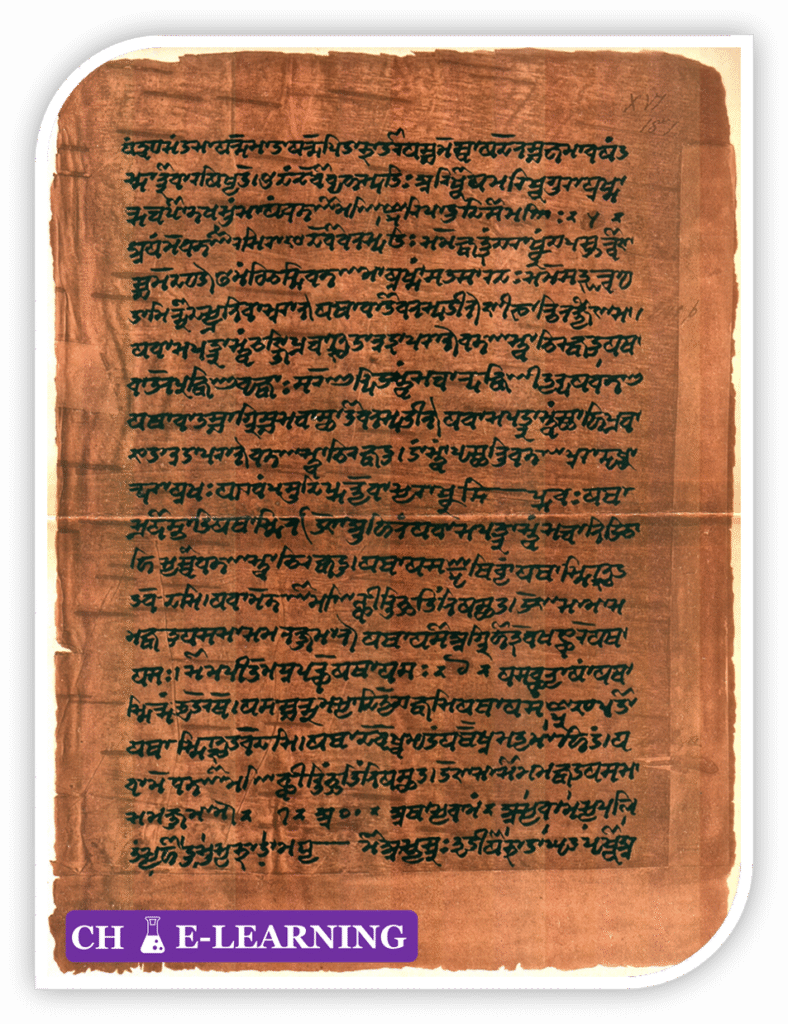
The Atharvaveda is distinct in its exploration of daily life, health, and human welfare.
- Unlike the other Vedas, it emphasizes practical aspects such as medicine, healing practices, household management, and spiritual wellness.
- It was composed between 1000‒800 BCE.
Structure & Organization:
- The Atharvaveda comprises approximately 730 hymns (suktas) across 20 books (Kāṇḍas कांडस).
- Major topics include:
- Medicinal remedies and healing incantations.
- Prayers for protection from disease, misfortune, and malevolent forces
- Domestic and social rituals fostering harmony and prosperity
- It references medicinal plants like Ashwagandha, Brahmi, and Turmeric, along with guidance on hygiene and immunity.
Significance: The Atharvaveda provides foundational insights into herbal medicine, disease prevention, and the interplay of health and spirituality. Its hymns promote psychological well-being, environmental conservation, and sustainable use of natural resources. The text is considered a precursor to traditional Indian naturopathy, sound healing, and related disciplines.
Layers of Veda::
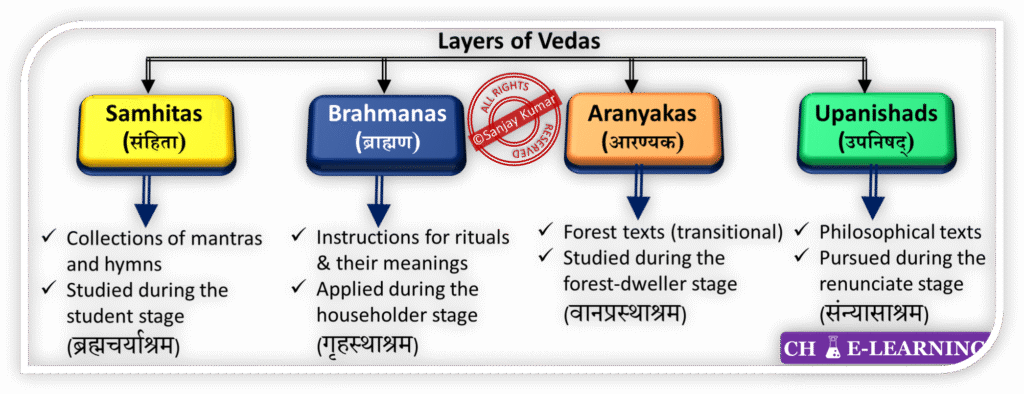
Each Veda is systematically divided into four distinct layers, each serving a unique purpose within Vedic literature.
Samhitas (संहिता):::
The Samhita means ‘Compilation of Knowledge’, comprises collections of hymns and mantras.
- These hymns are dedicated to deities such as Indra, Agni, and Varuna and serve as expressions of praise and devotion.
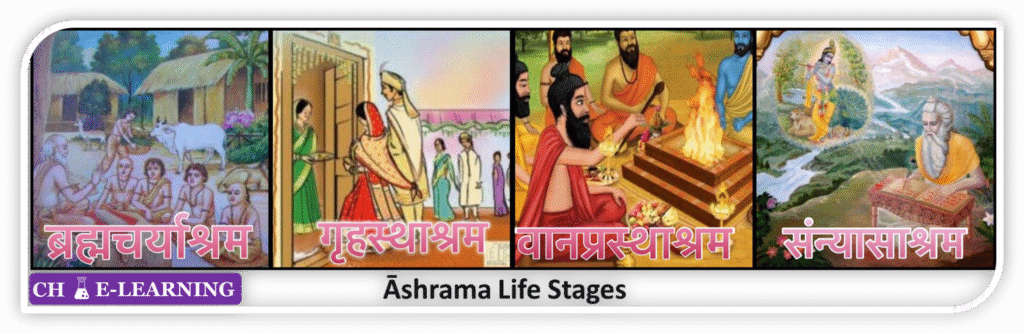
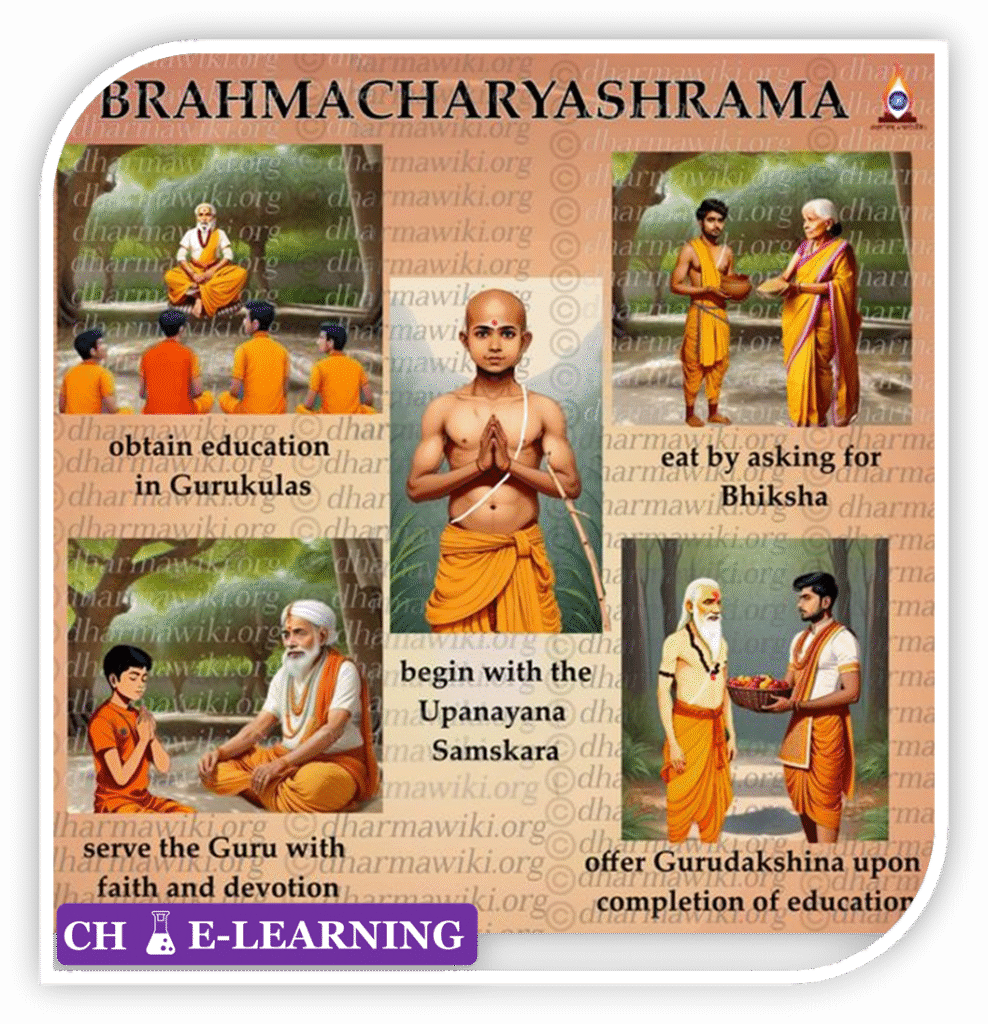
- The study of the Samhitas typically begins in early childhood, during the stage known as Brahmacharyashrama (ब्रह्मचर्याश्रम), which is regarded as the foundational learning phase in Vedic society.
Brahmanas (ब्राह्मण):::
The Brahmanas consists of ritualistic and ceremonial texts that explain the practical applications of the Samhita hymns.
- They contain rules and procedures for performing various rites, sacrifices, and other religious duties.
- For example, the Shatapatha Brahmana (शतपथ ब्राह्मण) of the Yajurveda provides detailed guidance on how sacrifices are to be conducted.
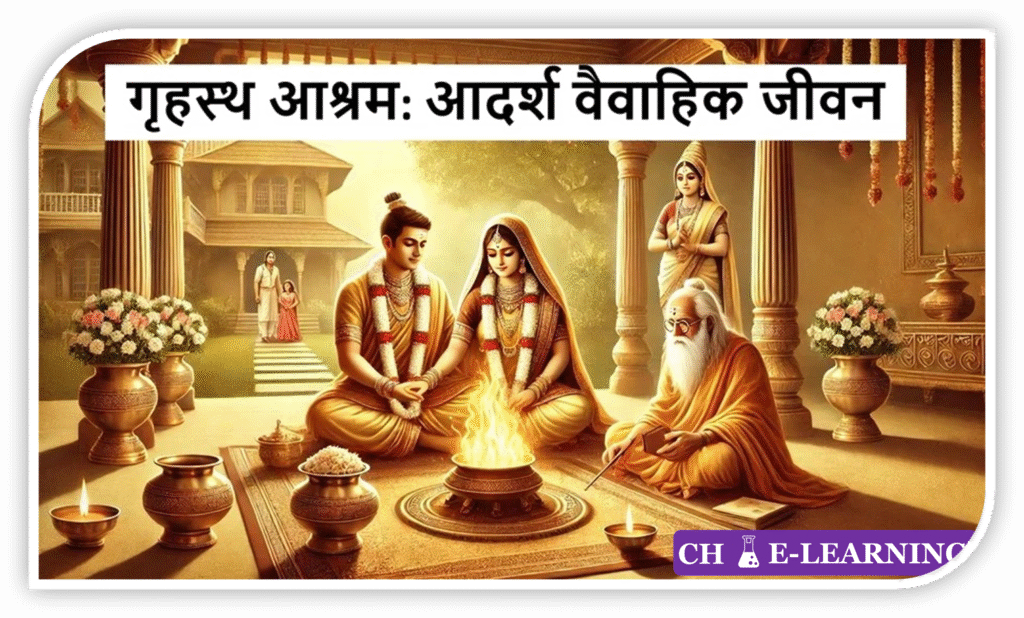
- The Brahmanas are prescribed for adult life, particularly the stage known as Grihasthashrama (गृहस्थाश्रम), or the householder phase.
Aranyakas (आरण्यक):::
The Aranyakas consist of meditative & transitional texts that bridge ritualistic practices and philosophical inquiry.
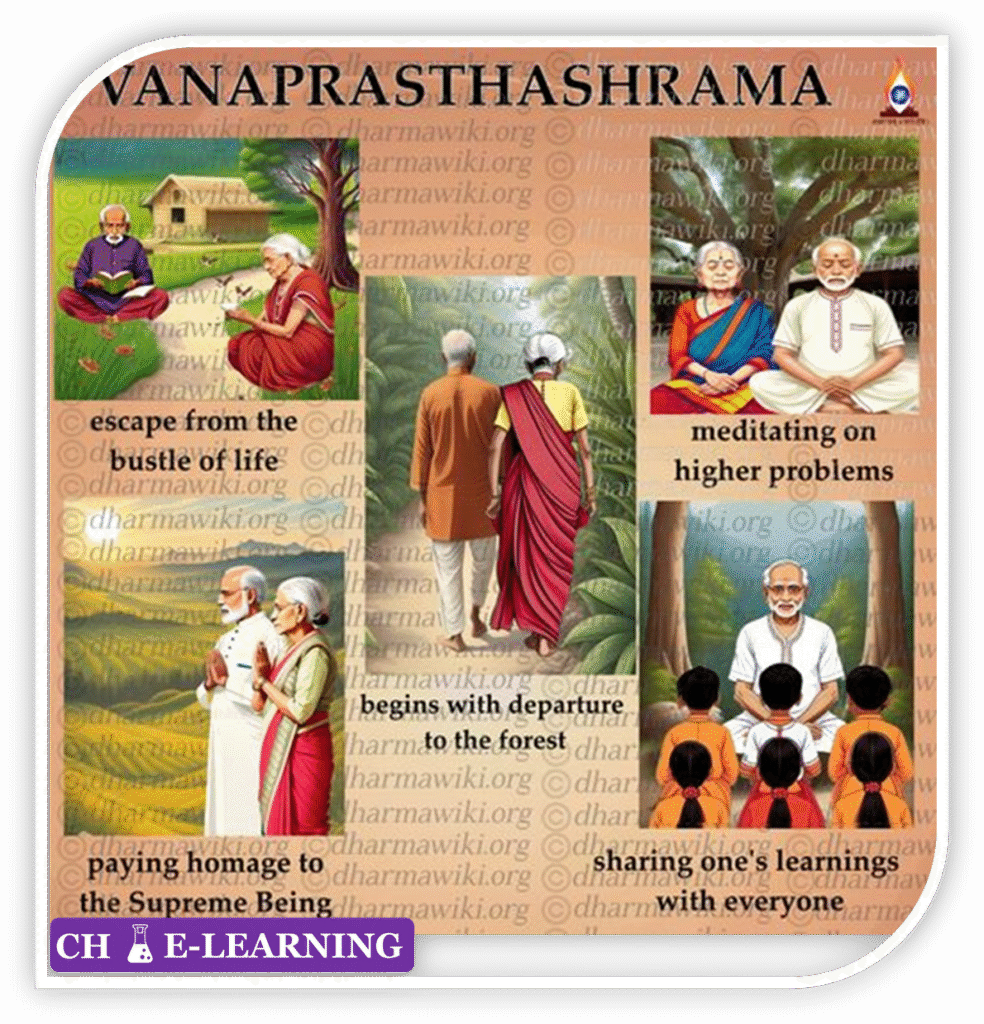
- The Aranyakas are intended for individuals entering Vanaprasthashrama (वानप्रस्थाश्रम), the semi-retired stage of life.
- The Aranyakas are studied by those who have completed their household responsibilities and are preparing for spiritual contemplation and meditation.
- For example, the Aitareya Aranyaka (ऐतरेय आरण्यक) of the Rigveda offers symbolic interpretations of rituals, moving towards a more reflective approach.
Upanishads (उपनिषद्):::
The Upanishads form the final layer of the Vedas, comprising philosophical and spiritual texts focused on metaphysical questions.
- This layer refers to the end (anta) of the Vedas.
- The Upanishads explore concepts such as self-realization, Atman (the soul), and Brahman (the ultimate reality).
- For instance, the Chandogya Upanishad (छांदोग्य उपनिषद) from the Samaveda contains the renowned teaching “Tat Tvam Asi” (तत्त्वमसि), meaning “You are That.”

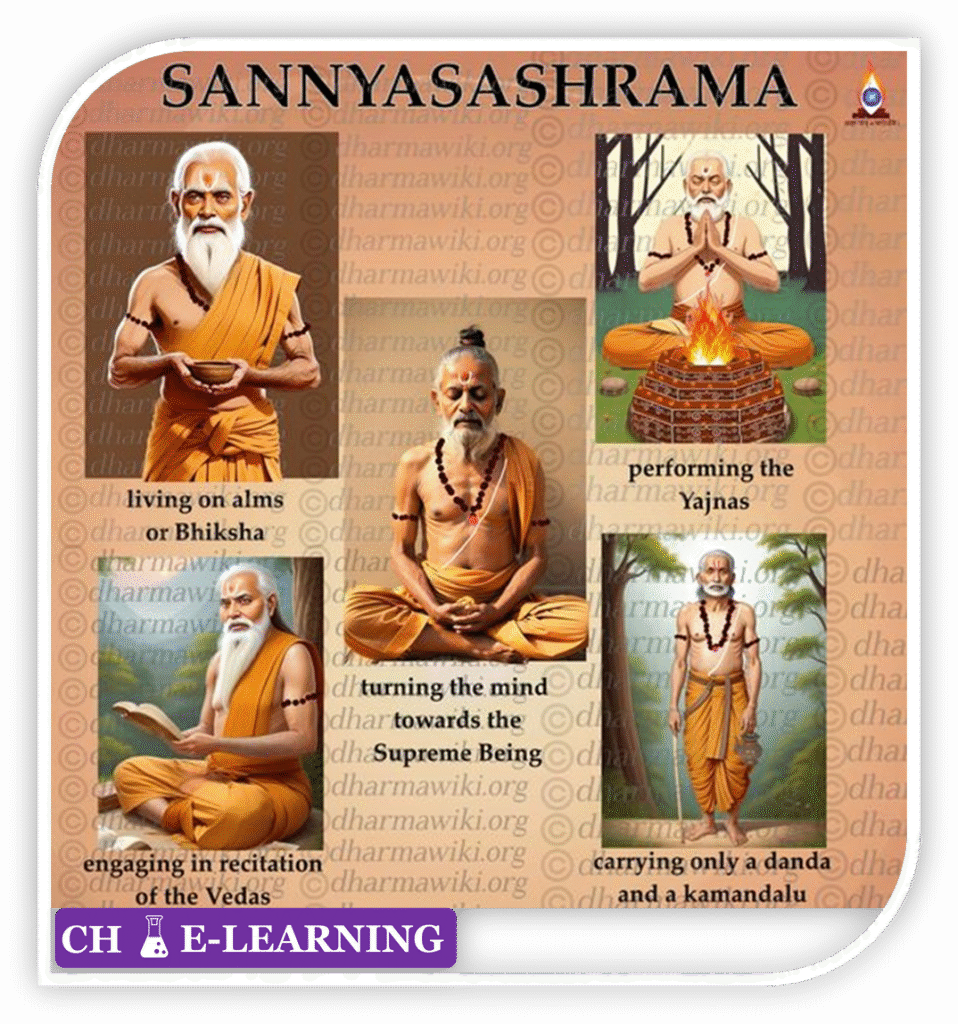
- The study of the Upanishads is associated with the Sannyasashrama (संन्यासाश्रम), or the renunciation stage or full retirement, which represents complete withdrawal from worldly attachments.
Smriti Literature:
Smriti Literature constitutes the secondary corpus of Hindu texts. The term Smriti (स्मृति) translates to ‘that which is remembered’.
- These texts serve as a supplement to Shruti and provide guidance on rituals, law, ethics, and daily conduct.
- In contrast to the fixed nature of Shruti, Smriti literature is inherently flexible, adapting to changing social and cultural contexts over time.
- The primary genres of Smriti literature include the Vedāṅgas (वेदाङ्ग), Ṣaḍdarśanas (षड्दर्शन), Purāṇas (पुराण), Itihāsas (इतिहास), Upavedas (उपवेद), Tantras (तन्त्र), Āgamas (आगम), and Upāṅgas (उपाङ्ग).
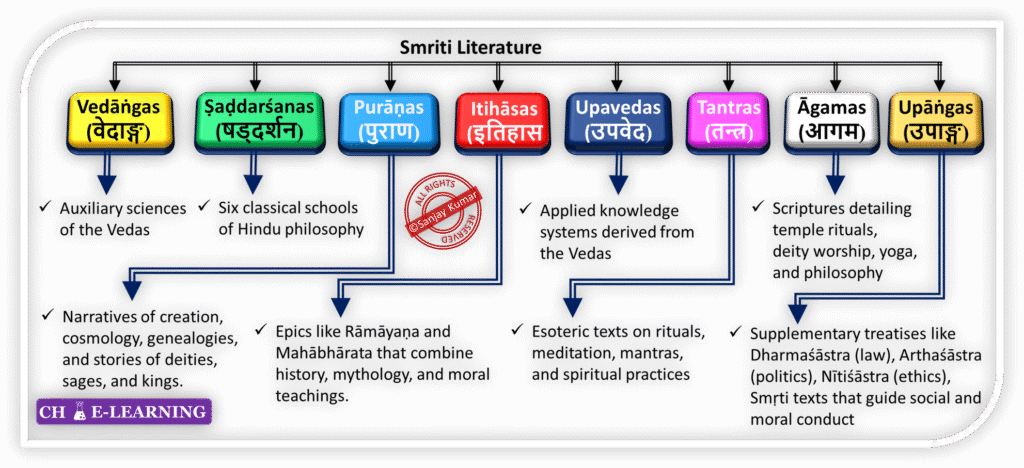
Vedāṅgas (वेदाङ्ग) (Auxiliary Disciplines)::
The Vedāṅgas comprise six auxiliary disciplines essential for understanding and preserving the Vedic corpus:
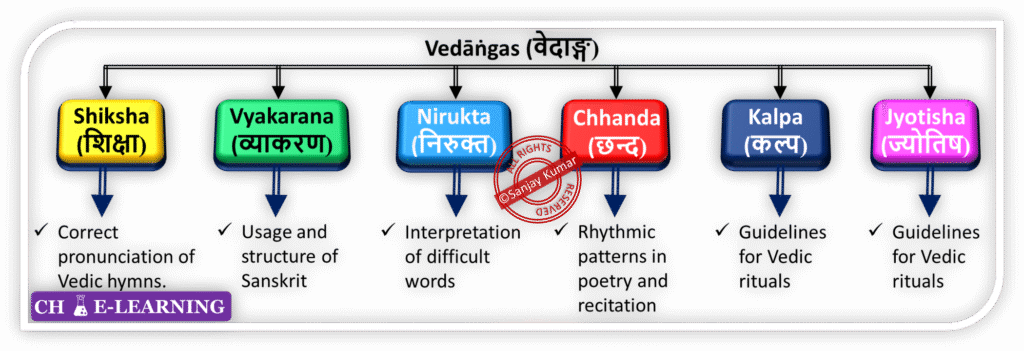
- Shiksha (शिक्षा) (Phonetics): Concerned with the correct pronunciation and intonation of Vedic hymns.
- Vyakarana (व्याकरण) (Grammar): Focuses on the proper usage and structure of Sanskrit, ensuring clarity and precision in communication.
- Nirukta (निरुक्त) (Etymology): Deals with the interpretation of difficult words, tracing their roots and meanings.
- Chhanda (छन्द) (Meter): Studies the structure of verses and rhythmic patterns in poetry and recitation. Foundational texts include Chhandashastra (छंदशास्त्र) by Acharya Pingala, also referred to as Pingal Shastra.
- Kalpa (कल्प) (Rituals and Procedures): Offers detailed guidelines for Vedic sacrifices, rituals, and ceremonies. Its principal texts are known as Kalpa Sutras.
- Jyotisha (ज्योतिष) (Astronomy and Astrology): Addresses the identification of auspicious dates and times for rituals, as well as broader aspects of time measurement and celestial phenomena.
Ṣaḍdarśanas (षड्दर्शन)::
The Ṣaḍdarśanas represent the six orthodox schools of Hindu philosophy. The word darśana means “to see,” “view,” or “insight”. Each system (darśana) offers a distinct perspective on ultimate reality (self−ātman, conscious self −Puruṣa), epistemology (valid knowledge− Pramāṇa), and cosmology (God− Īśvara, origin of the universe):
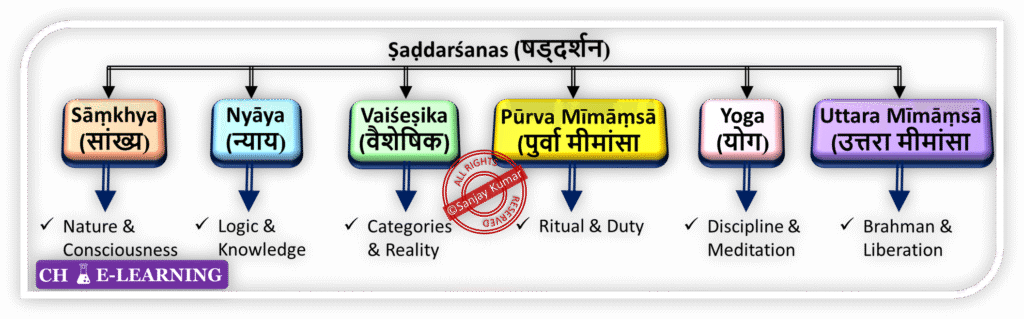
- Sāṃkhya (सांख्य): Presents a dualistic analysis of reality, distinguishing between the material and spiritual principles.
- Nyāya (न्याय): The system of logic, critical thinking, and epistemology.
- Vaiśeṣika (वैशेषिक): The system of naturalism, atomic theor,y and metaphysics.
- Pūrva Mīmāṃsā (पुर्वा मीमांसा or Mīmāṃsā): Concentrates on the interpretation of Vedic rituals and ethical conduct (dharma).
- Yoga (योग): A practical application of Sāṃkhya principles that focuses on controlling the mind and achieving liberation.
- Uttara Mīmāṃsā (उत्तरा मीमांसा or Vedānta): The system concerned with the self (Atman) and ultimate reality (Brahman).
Purāṇas (पुराण)::
The term Purāṇa means “ancient” or “old.” Purāṇa are a vast genre of ancient Indian texts that narrate cosmology, myths, legends, genealogies of gods, sages, and kings, as well as descriptions of the universe’s creation, destruction, and renewal cycles.
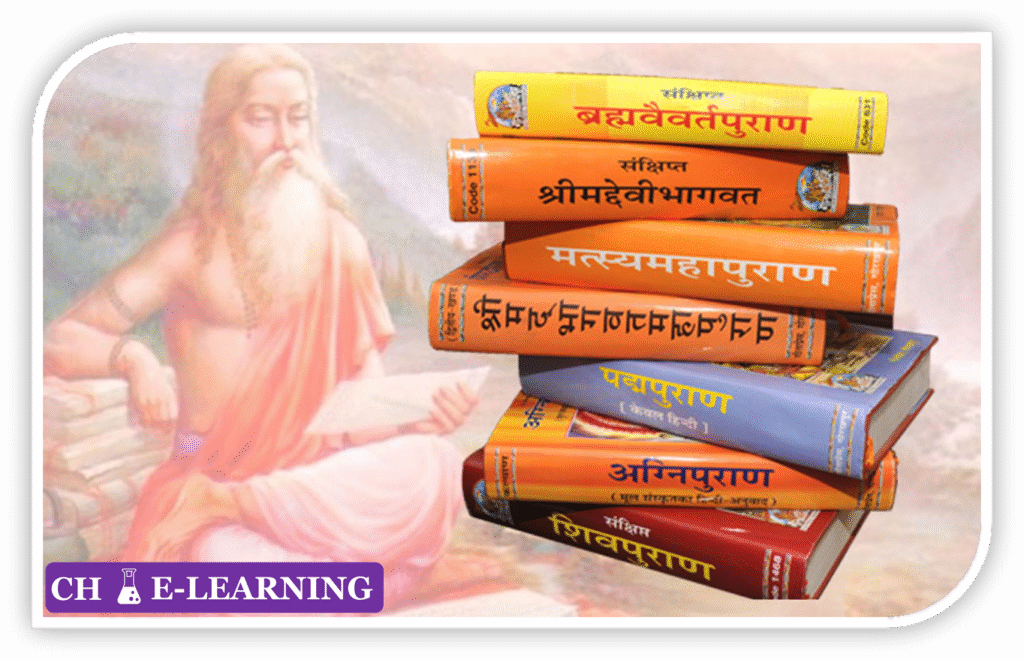
- They serve as a bridge connecting mythology, religion, and cultural history.
- There are 18 majors Mahāpurāṇas, classically grouped according to the three gunas (qualities):
- Sattva (सत्व) (Purity): E.g., Vishnu Purana, Bhagavata Purana
- Tamas (तमस) (Ignorance): E.g., Shiva Purana, Linga Purana
- Rajas (राजस) (Passion): E.g., Brahma Purana, Markandeya (मार्कण्डेय) Purana
Itihāsas (इतिहास)::
The term Itihāsa literally means “thus it happened,” and it refers to historical or epic narratives that transmit moral, social, and philosophical lessons through storytelling.
- The two principal Itihāsas in Hindu tradition are the Ramayana by Valmiki and the Mahabharata by Vyasa.
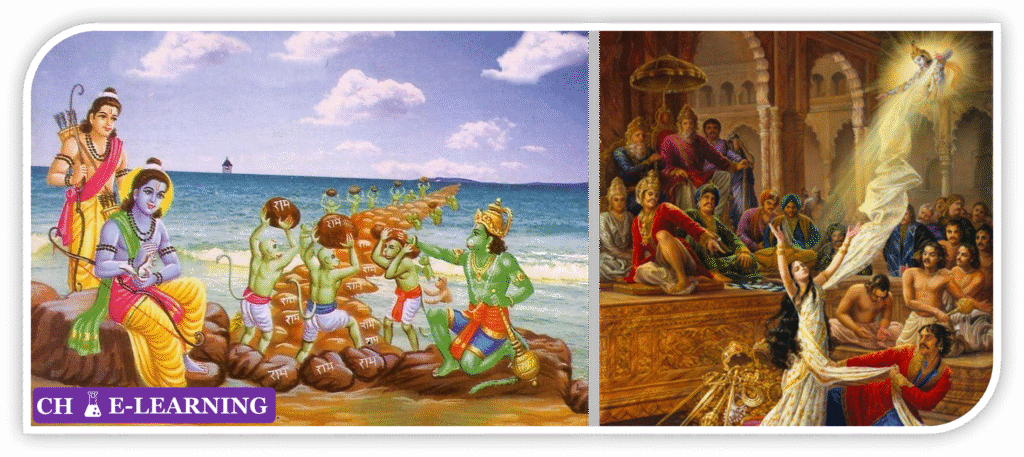
- The Ramayana recounts the life and adventures of Lord Rama.
- The Mahabharata centers on the great war between the Pandavas and the Kauravas, including the Bhagavad Gita discourse.
These epics are composed primarily in poetic form to facilitate oral transmission and memorization. They are considered truthful retellings of history, integrating divine intervention with human events, and serve as moral guides for society.
Upavedas (उपवेद) (Applied Vedic Knowledge)::
Upavedas (उपवेद) are the applied branches of Vedic knowledge, providing practical guidance in medicine, warfare, arts, architecture, and economics.
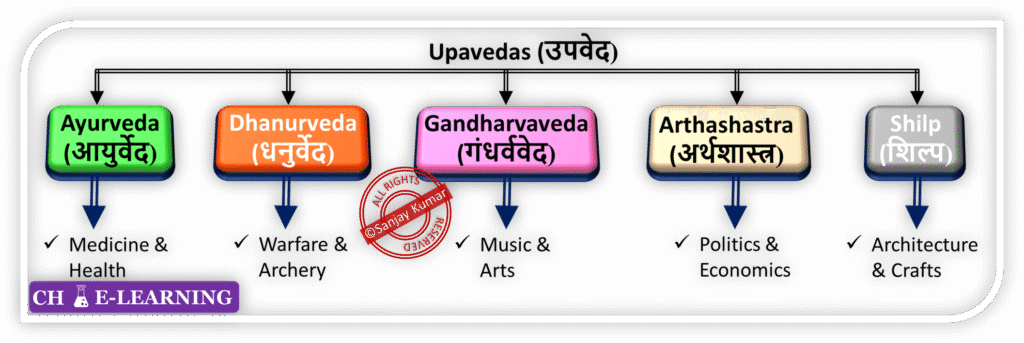
- Ayurveda (आयुर्वेद): Medicine & Healing
- Dhanurveda (धनुर्वेद): The science of warfare and military strategy, traditionally attributed sages like Vishwamitra (विश्वामित्र) and Bharadwaja (भारद्वाज).
- Gandharvaveda (गंधर्ववेद): The performing arts, music, dance, drama & poetry.

- Arthashastra (अर्थशास्त्र): Principles of economics, governance, and political strategy.
- Shilp (शिल्प)/ Sthāpatyaveda (स्थापत्यवेद): The study of architecture and fine arts.
Tantras (तन्त्र)::
Tantras are esoteric scriptures that emphasize on spiritual practice (sādhana) including rituals, meditation, yoga, mantra chanting, and initiation (dīkṣā).
- Tantric traditions focus on realizing the divine within the human body and the cosmos through complex symbolic practices involving deities, sacred diagrams (yantras), ritual gestures (mudrās), and energy concepts like Kundalini.
- Tantras incorporate themes from Vedic and classical Hindu philosophy (Samkhya, Vedanta).
- It also introduces worship of fierce and feminine deities, and sometimes heterodox practices. Tantras form the basis of some Shaiva, Shakta, and Buddhist traditions.
Āgamas (आगम)::
The Āgamas are a vast collection of scriptures primarily focused on temple worship, rituals, mantras, yoga, philosophy, and spiritual disciplines. The word Āgama means “that which has come down”—signifying tradition preserved and revealed by divine means.
- The Āgamas are classified broadly into three sectarian traditions:
- Shaiva Āgamas: Focused on Shiva
- Vaiṣṇava Āgamas: Focused on Vishnu
- Śākta Āgamas (शाक्त): Focused on the Goddess or Shakti, often overlapping with Tantras.
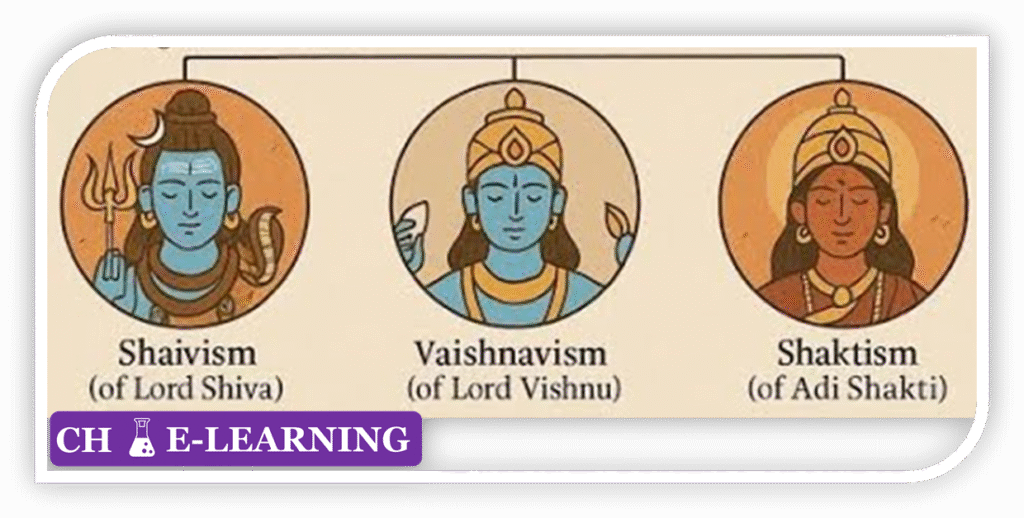
They provide detailed guidelines on temple construction, deity iconography, and ritual worship. The Āgamas also include teachings on meditation, yoga, and philosophical doctrines ranging from dualism to monism.
Upāṅgas (उपांग)::
Upāṅgas, meaning “auxiliary limbs,” encompass texts that support the main scriptures in various Hindu and Jain traditions.
- In Jain literature, the Upāṅgas cover a broad range of topics, including cosmology, philosophy, karma, soul theory, and rituals.
- In the Hindu context, Upāṅgas address additional art forms and branches of knowledge such as architecture, dramatic arts, music, and education, serving as supplements enhancing the core religious teachings.